Lower Shabelle is experiencing severe drought impacts, with communities facing shrinking water sources and declining agricultural production.
According to the FSNAU Early Warning Dashboard.
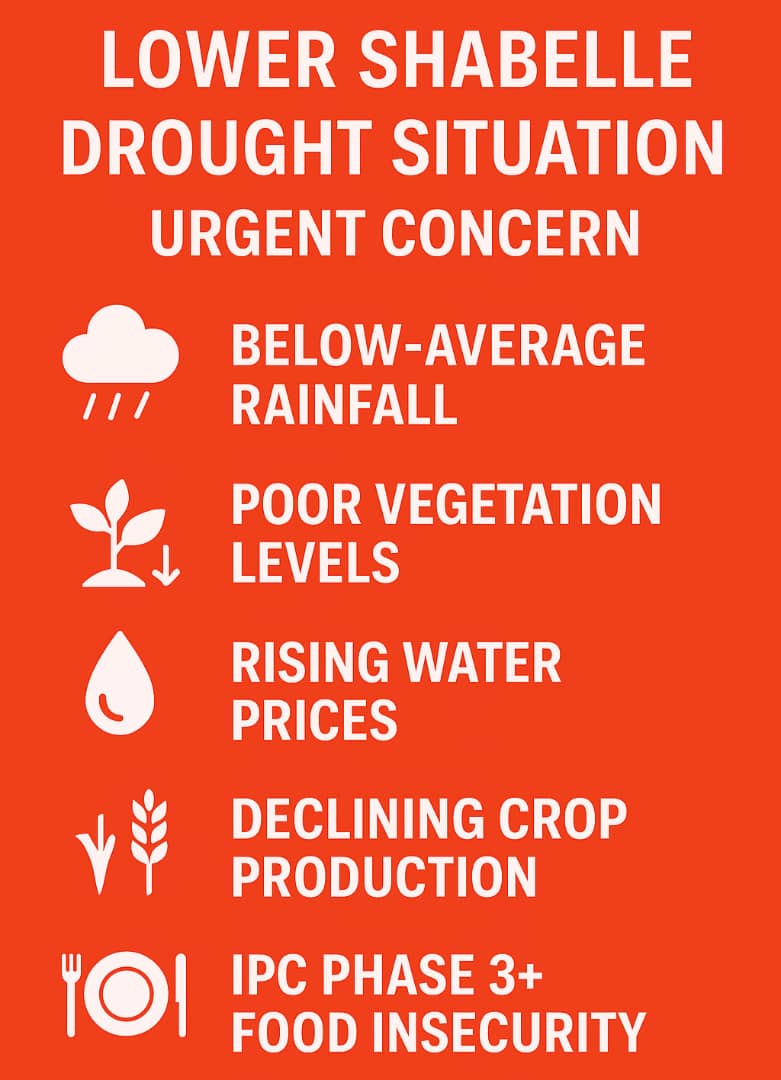
1. Rainfall is below average, and vegetation levels (NDVI) are poor.
2. Water prices are rising, and access to clean water is limited.
3. Shabelle River levels are reduced, affecting irrigation.
4. Crop production in this key farming zone is significantly declining.
5. Many households are now in IPC Phase 3+ (Crisis/Emergency) food insecurity.
These indicators point to a growing humanitarian risk, especially for farmers, pastoralists, women, and children who depend on stable water and food systems.
As HAMDI, we call on donors and partners to scale up support for emergency water access, livelihood protection, and resilience-building initiatives in Lower Shabelle.